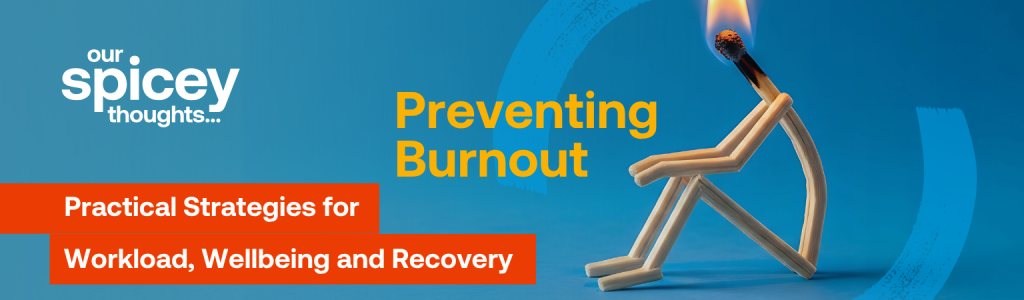
Preventing Burnout: Practical Strategies for Workload, Wellbeing and Recovery

Burnout rarely announces itself with dramatic fanfare.  More often than not, it sneaks in disguised as a busy month. 

Someone stays late to get a project over the line. Another person picks up a few extra tasks because a colleague has left. A manager starts doing more themselves because it’s quicker than delegating. Everyone agrees things are “a bit hectic right now” but assures each other it will settle down soon. 

Then three months later, nothing has settled down. 

The extra work has become normal work. The person who was “helping out” now seems to permanently own half of someone else’s role, and the employee who has always been wonderfully dependable is suddenly exhausted, disengaged or seriously considering whether life might be better somewhere with fewer Teams notifications. 

That’s when burnout can start looking like an individual wellbeing issue.  However, often, it isn’t. 

Very often, it’s a sign that something in the way work is structured, managed or communicated needs attention. 

Burnout doesn’t begin with burnout 

By the time someone tells you they’re burnt out, there has usually been quite a long runway leading up to it.  Maybe their workload has grown gradually without anyone stopping to reassess what is realistic. 

Maybe their priorities change every five minutes, so everything is urgent and nothing ever feels finished.  Maybe they’ve stepped into a new role without enough training, or their Job Description bears only a passing resemblance to what they actually do each day.  Or perhaps they’ve been signalling for a while that they’re struggling, but those signals have been interpreted as complaining, poor time management or simply “part of the job”.  This is why burnout prevention needs to go further than wellbeing initiatives. 

Yoga is lovely. Fruit bowls are nutritious. Employee Assistance Programmes can provide valuable support.  However, none of them will fix a role that has become impossible to perform within a reasonable working week. 

So how do you get things back on track?  One of the simplest places to start is role clarity. 

Start with the work itself 

When people know what they are responsible for, where their authority sits, what their priorities are and what good performance looks like, work is generally easier to manage.  When they don’t, things get messy surprisingly quickly.  You end up with duplication, gaps, people stepping on each other’s toes, employees taking on work because they’re not sure who else owns it, and managers discovering that three people thought somebody else was dealing with something important. 

A current, meaningful Job Description is useful here, but only if it reflects the actual role. 

If your JD says “other duties as required” and it’s those other duties that now occupy about 60% of your week, we may have moved beyond “other duties”! 

Regularly reviewing roles, responsibilities and decision-making authority helps organisations spot workload creep before it becomes a genuine wellbeing problem.  It also makes conversations about capacity much easier. 

Instead of “I’m really busy”, the discussion becomes “these are my agreed priorities, these are the additional responsibilities that have been added, and something now needs to move”.  That’s a much more useful conversation for everyone. 

Keep talking before things go pear-shaped 

Good feedback and check-in frameworks create space for conversations about workload, priorities, support and roadblocks before they become significant problems.  Questions like “What’s taking up more time than it should?”, “What could we stop doing?” and “What are you carrying at the moment that I might not know about?”, can tell you far more than another traffic-light wellbeing survey. 

The annual performance review is not the ideal place to discover that someone has been drowning since February.  Managers need regular opportunities to understand how work is actually feeling, not just whether deadlines are technically being met.  Because your highest-risk person is not always the one visibly struggling.  Sometimes it’s the employee who keeps saying yes.  They’re capable. They care. They don’t want to let anyone down. So, they absorb the additional client, fix the problem, cover the vacancy and work a bit longer.  Which is fantastic.  Until it isn’t. 

The important bit, of course, is what happens next.  If employees repeatedly raise concerns and nothing changes, you haven’t created psychological safety. You’ve created a very efficient suggestion box. 

Sometimes people need more skills, not more hours 

Workload isn’t always about the sheer quantity of work.  Sometimes work feels overwhelming because the person hasn’t been properly equipped to do it.  This happens frequently when businesses grow quickly.  Someone gets promoted into management because they were brilliant technically, then discovers that managing people involves an entirely different skill set. 

A system changes and everyone gets a five-minute demo.  A role becomes more complex, but development doesn’t keep pace.  Then we wonder why people are working longer and feeling less confident. 

Training and Development Planning should therefore be part of burnout prevention too. 

If someone is taking twice as long to complete something because they’ve never been shown a better way, the answer isn’t necessarily “work harder”.  It may simply be “let’s teach you”.  Novel concept, we know! 

Psychological safety matters, but it has to be real 

One of the strongest protections against burnout is having a workplace where people can say: 

  • ‘This isn’t manageable’ 
  • ‘I need help’ 
  • ‘I don’t understand what you’re asking me to do’ 
  • ‘I think we need to rethink this’ 

That sounds simple. In practice, it depends enormously on how leaders respond. 

If the first employee who raises a workload concern is labelled negative, difficult or not resilient enough, everyone else receives the message loud and clear.  And suddenly nobody has a workload problem anymore.  Magic! 

Psychological safety doesn’t mean agreeing with every concern or immediately removing work whenever somebody feels stretched. Businesses still need accountability, performance standards and the occasional difficult conversation.  What it does mean is that people can raise genuine issues without fearing that speaking up will be used against them. 

That gives managers the chance to intervene early rather than discovering a problem when someone is already at breaking point. 

And sometimes, something genuinely has to change! 

There is also a point where no amount of coaching, prioritising or clever calendar management will solve the problem.  The business may simply have outgrown its structure.  Perhaps roles have expanded dramatically. Perhaps responsibilities are sitting in the wrong places. Maybe a vacancy was never replaced, and the work has quietly been redistributed forever. Or perhaps growth has created a level of complexity that the original team structure was never designed to handle. 

At that stage, telling everyone to be more resilient is unlikely to cut it.  Sometimes you need to reset workloads, redesign roles, redistribute responsibilities, recruit, remove lower-value work or restructure.  Those conversations can feel uncomfortable, particularly when an organisation is trying to keep costs under control.  But leaving an unsustainable structure untouched has a cost too. 

Eventually it shows up in absences, mistakes, turnover, disengagement, customer experience or the loss of exactly the people you were hoping would help you grow. 

Prevention beats picking up the pieces 

WorkSafe New Zealand treats psychosocial risks such as excessive workload, poor work design and workplace stress as workplace health and safety issues.  That means burnout prevention shouldn’t sit solely in the “nice things we do for our people” bucket.  It belongs in good business management. 

Health and Safety inductions and processes should help people understand how to raise concerns. Managers should know what warning signs to look for. Workloads and role expectations should be reviewed as businesses change. Leaders should be equipped to have conversations early, rather than hoping things sort themselves out. 

And if you’re looking around your workplace thinking, “Hmm. We may have normalised a few things we perhaps shouldn’t have”, that doesn’t automatically mean there’s a crisis.  It just means it might be time for a closer look. 

Add Spice 

At Spice, we help businesses get underneath the wellbeing conversation and look at what might actually be driving the pressure. 

That might mean tightening up Job Descriptions and role clarity, introducing better Feedback and Check-in Frameworks, building Training and Development Plans, strengthening Health and Safety processes or helping leaders create greater psychological safety within their teams. 

And when the issue is bigger than a few tweaks, we can also help with workload resets, role redesign and restructures.  Preventing burnout isn’t about creating a workplace where nobody ever feels busy. 

Busy happens.  It’s about making sure “flat out” doesn’t quietly become the permanent operating model. 

If you’d like to take a fresh look at workload, role clarity or the people processes sitting behind your team’s wellbeing, talk to Spice. 

Add Spice. Your People Partner. 
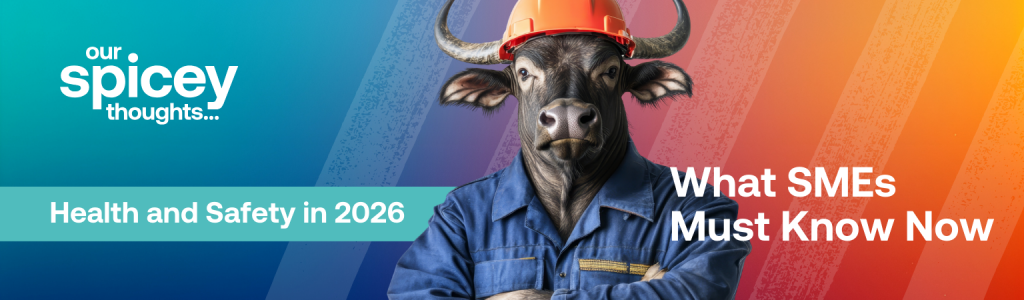
Health and Safety in 2026, What SMEs Must Know Now

We work with business owners and leaders across New Zealand every day, and if there is one consistent theme in health and safety conversations right now, it’s this, people are tired of tick box compliance.

Most SME owners genuinely want their people to be safe and well at work. What they don’t want is another generic template, another policy that no one reads, or another system that technically meets the rules but never quite makes it into day-to-day behaviour.

As we head into 2026, to date, we haven’t seen health and safety expectations getting lighter. Regulators continue to focus on real risk management, psychosocial wellbeing, and leadership accountability, not just paperwork. The good news is that when health and safety is done properly, it becomes far less painful and far more valuable.

From our perspective as HR and H&S consultants, the businesses that get this right are the ones that stop seeing health and safety as a compliance task and start treating it as part of their culture.

Moving Beyond Tick Box Compliance

The Health and Safety at Work Act 2015 has always been clear that managing risk is about what is reasonably practicable, not about how many forms you can produce. WorkSafe continues to reinforce that expectation, with an increasing focus on whether systems are actually implemented and understood, not just written down.

We regularly see businesses with thick H&S folders that look impressive, but when we ask staff how things work in practice, there is a disconnect. People are unsure what to do, hazards are managed inconsistently, and leaders assume compliance equals safety.

Our advice to business owners is simple. If your health and safety system does not reflect how work is really done, it will never be effective.

Practical, Tailored Documentation Matters

One of the biggest shifts SMEs can make is moving away from generic documentation and towards tailored, working material.

At Spice, our Tailored H&S Manuals and Working Documentation and Templates are built around your actual operations, risks, and team structure. That means policies that sound like your business, procedures that match real workflows, and templates that managers can actually use.

When documentation feels familiar and relevant, people engage with it. When it feels copied and pasted, it gets ignored.

Training That Sticks, Not Training That Ticks a Box

WorkSafe research shows that workers who receive relevant health and safety information and training are more confident and more engaged in managing risk. However, only around one third of New Zealand workers report receiving useful health and safety training in the past year.

This is where SMEs can make a real difference. Health and safety induction and training does not need to be long or complicated, but it does need to be meaningful.

We encourage clients to treat induction as the starting point of a conversation, not the end. Good H&S Induction and Training explains what safety looks like in your workplace, who is responsible for what, how to raise concerns, and why it matters.

Short refreshers, toolbox talks, and simple reminders throughout the year keep safety visible without overwhelming people.

Implementation Reviews Keep Systems Alive

Another common trap we see is the “set and forget” approach. Policies are reviewed annually because that feels compliant, but no one checks whether they are actually being followed.

Implementation Reviews are one of the most valuable tools SMEs can use. They help answer practical questions like, are managers confident applying the process, do staff understand expectations, are risks being managed consistently, and does the documentation still reflect how the business operates today.

At Spice, our implementation reviews focus on real world use, not just document compliance. This often leads to small, practical changes that make a big difference.

Clear Guides for Employees and Drivers

Employees, and particularly those who are out on the road, are often the ones exposed to the highest risk, yet they are sometimes given the least practical guidance.

Employee and Drivers Guides are an effective way to bridge this gap. These guides translate policies into plain language, outline common scenarios, and clearly explain expectations. They also help employees feel supported rather than policed.

From an HR perspective, these guides are a simple but powerful way to reinforce a safety culture without adding administrative burden.

Health and Safety as the Foundation of Wellbeing

Modern health and safety is no longer just about physical hazards. Psychosocial risks, workload pressure, and stress are increasingly recognised as critical safety issues.

Public Service Commission data and wider research show strong links between wellbeing, engagement, and safe behaviour at work.

When businesses treat health and safety as the foundation of wellbeing, rather than a compliance obligation, people are more likely to speak up, support each other, and take responsibility for risk.

Our advice to leaders is to model this visibly. Talk about safety, ask questions, follow through on concerns, and show that wellbeing genuinely matters.

Add Spice to Your Health and Safety Approach

As HR and H&S consultants, our role is to help business owners move from compliance driven systems to practical, embedded approaches that actually work.

Health and safety in 2026 is not about more paperwork. It is about smarter systems, better conversations, and leadership that treats safety as part of how the business operates every day.

From Tailored H&S Manuals and Working Documentation, to H&S Induction and Training, Implementation Reviews, and Employee and Drivers Guides, we help SMEs build health and safety frameworks that are practical, branded, and embedded into culture.

If your health and safety still feels like a tick box exercise, it might be time to rethink the approach.

Add Spice.

Wellbeing: The New Team Sport

Once upon a time, “wellbeing at work” meant a dusty fruit bowl in the kitchen, a yoga poster in the hallway, and maybe a resilience workshop after a stressful quarter. Cute, but not cutting it anymore.

Today, wellbeing isn’t a side project, it’s core business. It’s the difference between a team that thrives and one that barely survives on caffeine and coping mechanisms.
And here’s the kicker: it’s no longer just HR’s job to care!

Wellbeing: The New Team Sport

In 2025, the smartest organisations are realising that wellbeing can’t live in the HR folder, it needs a seat at the board table, the leadership retreat, and yes, even in the Monday morning team huddle.

According to Gallup’s 2024 State of the Global Workplace report, New Zealand ranks among the top 10 countries for daily stress, with 43% of Kiwi workers feeling stressed most of the day. At the same time, the Southern Cross’s 2024 Workplace Wellbeing Index shows that 89% of employees find it important to work for a company that supports the health and wellbeing of their staff.

Those statistics paint a clear picture: stress levels are high, and the appetite for change is real. But wellbeing isn’t solved with perks, it’s built on trust, empathy, and shared accountability. When everyone, from the CEO to the intern, understands that wellbeing is a collective responsibility, the culture shifts from “ticking the box” to truly taking care.

So, if your people look like they’ve been running a marathon in slow motion, it might be time to rethink your approach.

Leaders, Grab Your Capes (You’re Part of This Too!)

HR can build frameworks, policies, and programmes, but it’s managers and leaders who bring wellbeing to life day-to-day. From balancing workloads to creating psychological safety, wellbeing is no longer a “nice-to-have.” It’s leadership currency.

The data backs it up: 70% of the variance in team engagement is driven by the manager’s behaviour and leadership style (Gallup, 2024) . In other words, a team’s wellbeing often rises, or falls, with its leader.  That’s why emotionally intelligent leadership has become the new competitive edge.

At Spice, our Acentia Leadership Capability Workshops help leaders build that emotional muscle, learning to recognise burnout before it bites, manage conflict constructively, and create cultures where people can do their best work without sacrificing their wellbeing. Because let’s be honest, “work-life balance” might be a myth, but work-life harmony is absolutely achievable with the right leadership.

A leader who checks in regularly,  actively listens, and models healthy behaviour sends a powerful signal: wellbeing isn’t performative, it’s personal.

Moving From “Crisis Management” to “Care Management”

For too long, wellbeing has been reactive. Someone burns out, takes leave, and only then do systems kick into gear. But the modern workplace demands a proactive wellbeing mindset, one that prevents issues rather than patches them up.

Leading employers are shifting from “crisis management” to “care management,” embedding wellbeing into every stage of the employee experience, from onboarding to professional development.

That’s where Spice’s Induction and Training Programmes, Individual Development Plans and Extended DISC ® workshops shine. By helping employees set clear goals, identify stress triggers, and understand their own working styles, we lay the foundation for sustainable performance from day one.

And while policies and Health & Safety Manuals used to focus on physical risks, the conversation has evolved. Psychological safety, the freedom to speak up, fail safely, and ask for help, is now recognised as just as critical to performance as any physical safeguard. At Spice, we help tailor those frameworks to ensure they’re not just compliant, but genuinely human-centred.

Measuring What Matters

Here’s where it gets spicy: wellbeing and performance are now inseparable. According to Southern Cross’s Healthy Futures 2024 report, nearly 9 in 10 New Zealanders agree that businesses and employees flourish when wellbeing is prioritised. That’s not a “feel-good” metric, it’s a business case.

But wellbeing can’t be managed by guesswork. Regular pulse checks, engagement surveys, and transparent communication are essential for keeping a real-time view of how people are coping and connecting.

Spice’s Engagement Surveys and Analysis provide that clarity, highlighting not just satisfaction levels, but the deeper insights around connection, motivation, and workload balance.

Combine that with Extended DISC® Team Collaboration Workshops, and you uncover the “how” behind wellbeing: how people communicate, collaborate, and respond under pressure. It’s about transforming tension into teamwork and friction into flow.

Because when people understand each other, stress decreases, empathy increases, and performance follows.

Wellbeing as a Strategic Advantage

Here’s the shift: wellbeing isn’t fluffy, it’s profitable. It drives retention, reduces absenteeism, fuels creativity, and strengthens your employer brand. According to Deloitte’s global research, organisations that actively cultivate a wellbeing-focused culture see measurable gains in both performance and engagement, demonstrating that investing in wellbeing is not just good ethics, but good economics. When wellbeing becomes part of daily operations, employees are more loyal, resilient, and productive.

Embedding wellbeing into your Purpose, Vision, and Strategy (another Acentia specialty) transforms it from a cost centre into a growth driver. It signals to employees that their health, happiness, and humanity are part of the business equation, not outside it.

When wellbeing becomes a shared accountability, it creates a ripple effect: engaged leaders create empowered teams, who in turn build loyal customers. That’s when wellbeing stops being a line item, and becomes a strategic advantage.

Add Spice

At Spice, we believe thriving workplaces aren’t built on policies, they’re built on people who feel seen, supported, and energised.

From leadership development and engagement surveys to health and safety frameworks that include psychological wellbeing, we help businesses turn good intentions into lasting impact.

If you’re ready to make wellbeing everyone’s responsibility (without losing your sense of humour in the process), let’s talk.

Add Spice to your people strategy, because healthy teams make for happy, high-performing ones.

The New Currency of Work: Why Skills Are Taking the Lead

Once upon a time, your job title said it all. “Marketing Manager.” “HR Coordinator.” “Accounts Ninja” (okay, maybe not that one). Your role was your identity. Your daily script.

But in today’s fast-moving, digitally driven world of work, conversations around talent are evolving. You’ve probably heard it: “Skills are the new currency!” And they are, kind of.

But let’s be clear right out of the gate: job titles and job descriptions still matter. They remain crucial for setting expectations, maintaining structure, and fulfilling legal and compliance obligations.

That said, if we only focus on what people have done in the past or what’s written in their job descriptions, we risk missing out on a bigger opportunity. What if, alongside those foundational elements, we also put the spotlight on what people are capable of, their transferable skills, hidden strengths, and untapped potential?

That’s the shift we’re seeing in the workplace: not “either/or,” but “yes/and.”  Yes to job descriptions, yes to experience, and yes to a skills-based, strengths-led future.

Why Skills Are Gaining Ground

The reality is, work has become more complex, cross-functional, and fluid. Employees are increasingly asked to collaborate across teams, adapt to fast-changing priorities, and step into responsibilities that might not be covered in their original job description.

And so, organisations are evolving how they think about talent. Here’s how that’s playing out:

  • Skills-based talent management is being layered over traditional role-based structures. Rather than limiting talent decisions to what someone’s done before or what role they’re in now, employers are starting to ask: “What skills does this person have, and how else could they contribute?”
  • Hiring and career progression are expanding to include not just credentials and job history, but the potential to grow. It’s about valuing experience while also recognising the importance of adaptability, curiosity, willingness and capability.
  • Strengths are becoming strategic assets. People bring more than their résumés to work, they bring their natural style, communication preferences, and problem-solving approach. And those qualities are often invisible unless we actively explore them.

This is where the magic happens: when you combine what someone’s done with what they do best, you unlock new energy, engagement, and impact.

Strengths-Based Development: The Missing Piece?

If experience is the foundation and skills are the currency, then strengths are the engine room.  What do we mean by that?  While experience provides the solid base,  and skills are what individual’s use to navigate their professional landscape – their practical abilities and competencies – people’s strengths are what truly propel them forward and make them uniquely effective in their role.

But in many workplaces, people’s strengths remain under-used or overlooked entirely. That’s a missed opportunity, not just for individual development, but for organisational performance.

When people are encouraged to work in ways that align with their natural style, whether that’s leading, supporting, analysing, creating, or connecting, they don’t just perform better. They feel more confident, more resilient, and more fulfilled.

At Spice, we use Extended DISC to help teams and individuals uncover these strengths. Extended DISC offers insight into how people prefer to work and communicate, and how they can flex those preferences depending on the situation.

This isn’t fluffy. It’s practical, measurable, and transformational.

The Role of AI and Workforce Data

Another big player in the skills-based movement? AI and data.

Smart talent platforms are now helping HR teams and business leaders map the skills they have, the skills they need, and the gaps in between. It’s enabling more proactive workforce planning, more targeted learning and development, and more meaningful conversations about career growth.

But tech is only part of the story.

The real power lies in how organisations use these insights to create a culture where learning is continuous, feedback is constructive, and strengths-based leadership becomes the norm, not the exception.

Why This Matters: The Stress Connection

This shift isn’t happening in isolation. It’s happening in a context where stress-related unscheduled leave has increased from 40% to 50% between 2023 and 2024.

That’s huge.

When employees feel boxed into rigid roles, with no room to stretch or be seen for what they could do, it takes a toll, not just on performance, but on wellbeing.

Skills-based, strengths-led approaches offer a better alternative. They allow people to move, grow, and contribute in ways that are more aligned with their strengths, and far less stressful in the long run.

What Organisations Can Do Now

If you’re thinking, “Okay, this all sounds great, but how do we make it real?” here’s where to start:

1. Keep the structure, but build flexibility into it.

Yes, job descriptions still matter. But can they evolve? Can you write them in a way that invites stretch, development, and shared ownership?

2. Shift conversations from ‘What’s your title?’ to ‘What can you contribute?’

Make space for people to talk about their skills, passions, and aspirations, not just their current role.

3. Invest in strengths-based tools and frameworks.

Tools like Extended DISC can help your teams understand themselves and each other, and build more trust, clarity, and collaboration.

4. Create visible pathways for growth.

Whether it’s lateral moves, project work, secondments, or learning sprints, make it easier for people to grow without always needing a promotion to do it.

5. Use data wisely.

AI won’t replace human insight, but it can supercharge your people strategy. Use workforce analytics to guide decisions, not just guess.

The Bottom Line

We’re not replacing job titles, tearing up job descriptions, or throwing out experience.

What we are doing is widening the lens.

We’re recognising that in a dynamic, human-centred workplace, experience + skills + strengths = real, sustainable performance.

And that’s the future of work worth investing in.

Want to Take the Next Step?

At Spice, we help organisations future-proof their teams by blending the best of both worlds: structure and flexibility, experience and potential, clarity and curiosity.

Whether it’s Extended DISC, vision and values alignment, team chartering, or culture workshops, Spice HR are here to help you create a workplace where skills and strengths come to life.

Making Your Workplace A Community That Values Mental Health And Wellbeing

In the wake of last month’s Mental Health Awareness Week, it’s timely to turn your attention to the thing at the core of good mental health… wellbeing and wellness.

Are they a priority at your workplace?

If not, now is the time to change that!

Creating an environment that promotes good mental health and wellbeing not only benefits your individual team members but can also enhance the overall performance of your business.

So, let’s explore how you can create that environment now.

What Is Wellbeing?

According to the Mental Health Foundation website, ‘Wellbeing means we have the tools, support and environments we need to be who we are and to build and sustain lives worth living.’ And we couldn’t agree more!

Good wellbeing is all about creating an Aotearoa where we feel good and do well most of the time. It’s not about eliminating tough times, mental illness or distress – these will inevitably still occur. But it is about ensuring we are equipped with the tools, support and environment we need to work through any difficulties we encounter.

While a lot of that is down to the individual involved, a person’s workplace also has a huge role to play in achieving excellent wellbeing. So, let’s explore what that means in greater detail.

Supporting Good Mental Health

Before you can even begin to support mental health in your business, the people in key influencing roles need to understand what mental health actually is. There can be a perception that when we talk about mental health, we are actually talking about mental illness.

That is not what the focus should be at all.

Just like physical health, mental health is something we all have and need to look after. After all, there is no health without mental health! When our mental health is good, it translates to better physical health, greater resilience and the ability to feel happy, confident and secure.

Everyone can enjoy good mental health and wellbeing, regardless of what they have going on in their life. A big contributor to that will be a supportive and positive working environment.

Your Workplace Is A Community

A workplace is more than just a space where employees go to carry out their duties and meet deadlines. While work obviously goes on in a workplace (duh!), it should also be a space that ensures individuals feel supported, valued and connected.

It should be a community.

Communities are all about connection. That strong feeling of belonging, support and a shared purpose creates a sense of togetherness. When your team feel like they are part of a community, they experience all the elements that encourage good wellbeing. They are also more likely to experience job satisfaction and loyalty, along with greater productivity.

Building a workplace community is not just about good remuneration or creating a great office vibe. It’s also about creating an inclusive environment where everyone feels respected and heard, meaning that they are always able to contribute their best.

So, how can you build this community of wellbeing?

Build A Community Of Care

Community focused workplaces don’t happen by accident. Everyone from leadership to the most junior employee should consistently foster an environment where wellbeing is prioritised and mental health holds the same importance as physical health.

These are just some of the ways you can build a community at your workplace:

  • People At The Heart: When you are focused on your people, they know they are a valued asset to the business. Create regular opportunities for team interaction and connection so you are constantly building the bonds between your employees. While some scheduled team building events are helpful, you can also foster this connection through informal team catch-ups and morning teas, a walking lunch or a shared project. These moments are continual opportunities to feel connected and appreciated.
  • Wellbeing Initiatives: Initiatives that support wellness can be a big hit with employees and do double time on the wellbeing front by encouraging good mental health. These could be anything from wellness challenges to healthy office snacking or even mindfulness sessions and wellbeing benefits. The simple act of integrating wellbeing into a daily workplace routine reinforces the message that good health matters to your business.
  • Empathy and Leadership: One size certainly does not fit all when it comes to mental health. Your managers and leaders should lead with empathy, recognising that each team member will experience unique challenges. By offering support, showing understanding and maintaining regular communication, you can build trust, psychological safety and a positive work culture amongst your team.
  • Check Ins: You won’t know unless you ask! So, maintain regular check ins for your team, both at an individual level and as a collective. That way, you can always have a gauge of how your employees are feeling. Depending on the employee and their specific situation, check-ins can be formal one-on-one meetings or a casual chat – the objective is simply to identify any issues early and maintain a strong connection.

Valuing Wellbeing and Mental Health

A big part of building your community of care will be valuing wellbeing and mental health. Not only does it mean fostering the positive space we just discussed, but it also involves recognising everything can’t be sunshine and rainbows all the time!

Stress and anxiety are ever-present threats to your team’s mental health. That’s why it is more important than ever to take proactive steps to prioritise wellbeing.

Here are some ways you can do that:

  • Open Communication: When mental health is openly discussed in the workplace it helps to remove any associated stigma. Your team should feel comfortable speaking about wellbeing without fear of judgment. Management should take the lead in creating safe spaces for open conversations and getting some of your team trained in mental health first aid will also really help.
  • Provide External Support: Support within the workplace is essential, but sometimes people will feel more comfortable speaking with an experienced professional. Offering an Employee Assistance Program (EAP) or mental health workshops will give your employees access to strong support and demonstrate that their wellbeing is a priority.  Here at Spice HR we are loving a new NZ start up’s approach to holistic wellbeing support for employees. Reach out if you’d like to find out more!
  • Encourage Work/Life Balance: A healthy work/life balance is essential for maintaining good mental health. So, encourage your team to create a balance that works for them. It could be flexible work hours or conditions, taking designated mental health days, or fully disconnecting outside of work hours.
  • True Inclusivity: Inclusivity is not just a buzzword, it is vital for wellbeing. A truly inclusive workplace will embrace diversity and ensure everyone feels valued regardless of their background, culture or personal circumstances. When people feel included, they are less likely to experience feelings of stress and isolation, preserving their wellbeing.

Prevention Is The Key

Is your workplace more than just a place of employment? Are your people active members in a community that helps them to thrive?

If not, now is the time to do something about it! When it comes to mental health concerns, you don’t want to be the ambulance at the bottom of the cliff! While mental health support is important, prevention of stress and burnout is the better avenue.

So, if you can work to build a great community, you’ll be taking proactive steps towards prevention and creating a great space for your team to work within.

If you are feeling stuck on how to ensure wellbeing is a big focus for your business, there are some great tools that can help make it happen. Firstly, it can be super beneficial to speak to an HR wellbeing expert. And you’re in luck, we Spice Gals are the experts you are looking for!

Backed with plenty of experience in this field, we can craft wellness solutions that make wellbeing a true priority. We can even help you implement a fantastic wellness platform that empowers your team to look after themselves in the ways that suit them best.

What are you waiting for? Make wellness a priority and contact the Spice gals now!

Are You Prioritising Employee Wellness?

Mental Health Awareness Week is 18-24 September this year.

It’s a fantastic initiative that shines an annual light on the importance of employee wellness and good mental health.

This year the focus of Mental Health Awareness Week is equipping yourself with proven tools to boost your mental health.

We thought we would explore this concept in relation to the workplace, as this can be an area of prolific stress for many people.

So, this September (and beyond), let’s shine a light on how important it is to prioritise employee wellness and the ways that you can do that in your workplace.

Are You Prioritising Employee Wellness?

Prioritising employee wellness is an important part of being a responsible employer. But wellness is not just attributed to one thing. To achieve true employee wellness, you should look at things holistically. These are some of the areas you should be considering:

Physical Health

Physical health and mental health are closely connected. So, it stands to reason that encouraging good physical health can positively influence your team’s mental health.

Regular physical activity triggers the release of endorphins, dopamine, and serotonin in the brain. These chemicals are known as “feel-good” neurotransmitters and play a crucial role in regulating mood and reducing feelings of anxiety and depression. Getting active also helps to lower your cortisol levels, allowing your body to better manage and reduce stress.

All this activity contributes towards better sleep, improved cognitive function, stronger self-esteem, and greater emotional regulation from a strong mind-body connection. Basically, strong physical health is good news for employee wellbeing!

How can you achieve it?

Here are some strategies you can use to encourage good physical health in your workplace:

  1. Wellness Programmes: Fitness challenges, health assessments, and nutrition workshops are all examples of ways you can get your team to focus on their own physical health.
  2. Active Workspaces: Give your team the chance to be passively active with things like standing desks, walking meetings, and space for stretching or moving around.
  3. Active Commuting: Make it easy for your team to use a bike or their feet to get to work by providing bike racks, showers and changing facilities.
  4. Workplace Fitness: You could even arrange on or offsite fitness classes, yoga sessions, or group walks – promote them well and make the options easily accessible.
  5. Supportive Policies: Support good physical health with policies like paid time off for medical appointments, discounted gym memberships, flexible working hours to play sports or participate in other physical activities and allocated physical activity breaks.

Financial Health

Financial problems can be a common source of stress and anxiety, which can negatively impact mental health of your team. After all, it’s hard to be relaxed and happy when worrying about money.

Financial health is a growing concern in the current climate. The cost of living seems to rise weekly (without much sign of slowing), and it doesn’t help that a potential recession is looming. Protecting the financial health of your team can give them a greater sense of security, improved relationships and better quality of sleep, which all contribute to stronger mental health.

How can you do it?

The first step in creating an environment of good financial habits is to ensure you pay your team correctly and on time for every pay cycle. Then, the second step is providing opportunities for good financial education.

Education around Kiwisaver, budgeting, medical insurance, and general financial awareness are very important to share. It’s also important to educate your team that good financial health is a gradual process and can require consistent budgeting, saving and planning to achieve. There are some excellent resources to support this education process on Sorted.

Finally, keep an eye on the individual members of your team to ensure that financial stress isn’t having a significant impact on their mental health. Make sure you have the appropriate support from trained mental health professionals to call on if you feel that financial stress is setting in.

Checking In

Regular check-ins with your team can help to promote good mental health in the workplace. It is an opportunity to foster open communication, show recognition and appreciation, offer feedback, problem solve, and affirm the support system that is available to them. These check-ins contribute towards maintaining a positive work environment and fostering wellbeing amongst your team.

How can you do it?

Make regular check-ins a priority for team members that are on site and those that work remotely too. That personal touch will remind them that they are a key part of the organisation.

These catch ups can be an informal chat or a more structured meeting. Try to connect with each member of your team monthly at least, or more regularly if you see that anyone is struggling.

Work/Life Balance

Striking the right balance between professional responsibilities and personal life can result in reduced stress levels, increased happiness and improved mental wellbeing, which are all essential for good mental health.

But it’s important to remember that balance can look different for everyone. Depending on the individual, balance can involve setting personal boundaries, managing their time effectively, having flexible conditions, and having their needs communicated and heard. Achieving balance is an ongoing process and adjustments might be needed as circumstances change.

How can you achieve it?

As an employer, you can play a crucial role in helping your team achieve a healthy work/life balance. And it is worth achieving it too. Managing to create an environment of balance can lead to increased job satisfaction and productivity, plus all-round positive vibes.

Here are some ways you can help your team find their balance:

  • Flexible working hours and the potential to work remotely (if possible)
  • Set clear job and performance expectations and listen to feedback about whether the expectations are realistic and workable
  • Cut out unnecessary meetings and encourage collaborative communication channels instead
  • Monitor and manage workloads to prevent excessive stress
  • Encourage regular breaks during the day and longer-term annual leave to recharge batteries
  • Provide time management training
  • Encourage disconnecting from work related duties outside working hours
  • Have your managers model healthy work/life balance behaviours to lead by example
  • Provide training on how to set appropriate boundaries so that work does not encroach on personal time

Lead From The Front

There is a reason that flight attendants tell you to put your own mask on before helping others in an emergency. You can’t possibly help anyone else if you don’t have your own ducks in a row first! This applies to mental health in the workplace too.

It is important for leaders to consider their own mental health and lead from the front in this area. Burnout is a real threat for everyone, you are not immune just because you are management. In fact, you can be at greater risk due to the pressure of the role. So, ensure your managers and team leaders continue to look inwardly as well as caring for their teams.

Let’s Talk About It

Encourage your team to talk about any problems they are experiencing in the workplace. This will help to encourage perseverance and consolidation at the same time.

Communication will be a big part of highlighting the importance of good mental health in the workplace. So, you want to empower your managers with valuable tools that allow them to help others through effective communication and understanding.

How can you do it?

Having a mental health first aider in your workplace can be invaluable. If you don’t currently have one, visit Tepou for a list of accredited instructors.

You should also ensure there are plenty of Mental Health resources available for your team. A great place to find these resources is on the NZ Mental Health Awareness Week website.

Prioritising Employee Wellbeing And Mental Health

We don’t have to tell you that employee wellness is really important. Without it, you can’t hope to have a positive workplace with happy and productive employees.

So, how do you put employee wellbeing at the forefront?

A great way to do it is to engage the services of an expert HR team. HR will ensure you shine a spotlight on the HUMAN element of your workplace; after all, it is literally in the name! Rest assured that HR experts know a thing or two about building great, positive spaces for humans in the workplace.

Sometimes it can be difficult to establish whether you have effective employee wellness policies or if there are some areas that might need work. The team at Spice HR are some of those HR experts that can help you to establish the right wellness practices to suit your team and management.

Get in touch with us today to make your employee’s wellbeing a priority.

Christmas Is Coming: Let’s Wrap The Year Up Positively


Christmas is just around the corner. 

While you might not be ready for it yet, the silly season will stop for no one!

That means there is only so much time to get everything wrapped up before the end of the year. But there is also a silver lining to the situation. 

The good news is that Christmas creates a great opportunity to celebrate the successes of the year and signals an appropriate time for a well-deserved break.  

So, how do you make sure everything is wrapped up in time and you are ready for Christmas? 

We’ve got all the info you need right here. 

Celebrate the Year 

As the year draws to a close, it is the perfect time to celebrate all the great things that have happened in the last 12 months. These achievements don’t all have to be enormous ones, it is appropriate to celebrate all the small things as well. 

Thank your team for all that they have done this year. After all, it hasn’t been an easy one. With the pressures of Covid, rising inflation, and the ongoing navigation of a new normal after the last couple of years, they deserve a giant thank you! 

Don’t worry about it feeling cheesy. Sometimes a bit of cheese is worth it! Especially as it will remind your team that they are respected and valued by you.  

It is also vital that you create the right kind of feel moving into the new year. It’s time to look forward with a positive outlook. So, finishing this year on a positive and celebratory note will help set your team up for a great year ahead.  

A cool way to do this is to help your team members set goals to work on in the new year. They should be positive goals that focus on moving forward – perhaps career progression, training and development, or project work. 

Is it Time to Party? 

The annual Christmas party used to be a staple in everyone’s calendar. Then, 2020 rolled around, and the obligatory Christmas party took a backseat. You can revive it again this year or take a different approach to bring everyone together. 

We know budgets are tight, so it doesn’t have to be an expensive event. A casual team BBQ, a potluck dinner, a round of mini golf, or a trip to the bowling alley can all be fun. It’s simply about marking the end of the year and giving your team the chance to connect socially. If your team enjoy some time together in a relaxed and neutral setting, it will only help to build great morale and teamwork in the workplace. 

Don’t forget those team members who are working remotely. Round everyone up and regroup with an end of year get-together. And if it’s not possible to get everyone together in one location, what about an online Christmas party via video conference? Take your party connections to the next level by delivering little gift boxes of treats that can be opened and enjoyed while everyone is “partying”. 

Wellbeing Check 

After a draining year, it is timely to check in with all the members of your team to see how they are really doing. Christmas might not necessarily be a merry time for everyone. So, it is a great opportunity for a wellness check with your team. 

We spend such a large portion of our lives working, so it is important that your team feel mentally safe and valued at work so they can perform at their best. A wellness check can help you determine if that is the case for your people. 

This process is about honest and open conversations, as well as actively listening to what your team members are saying and what they might be reluctant to say. Remind your team of available support options – like speaking with HR, anonymous feedback, or any EAP avenues. 

Christmas Break 

Many businesses will choose to close for a period over Christmas. Will your business be one of them? If so, you will need to ensure you notify all your employees of the closure at least 14 days in advance. 

As part of that conversation, it is helpful to communicate what options your team have for leave. Obviously, they can take this as annual leave if they have enough available. But it is important to provide options for those without an adequate leave balance. You may choose to let them take leave in advance or require leave without pay. 

You can find more information about how to handle an annual closedown period here

The Christmas holidays also mean there are plenty of public holidays to observe. You’ll need to make sure you are following the correct public holiday guidelines for your staff in terms of wages and rostering. This applies regardless of whether you are having an annual closedown period or not. Make sure you are following the rules by checking out the public holiday guideline info here.  

Ready to close the book on 2022? You are not alone there! And if you need help tying up any loose ends or planning for a productive 2023, then the Spice Gals are here for you. 

We can help you navigate the guidelines around public holidays and annual closures or set up the ultimate wellness program for the new year ahead. For any and all HR queries, get in touch with our Spicey team! 

Let’s Check In With Our Mental Health

As Mental Health Awareness Week approaches in New Zealand, the focus of many companies turns towards ensuring their teams are checking in with their mental health. 

This is now more important than ever! 

Sure, we are hopefully over the worst of the pandemic restrictions, but the ongoing repercussions are most definitely being felt. 

So, let’s explore what you can do to check in with your own mental health, as well as the mental health of your team. 

Let’s Check In With Our Mental Health 

Do You Have The Right Support? 

Many people have developed strong skills of resilience in the last few years. Resilience was a vital tool to help navigate the choppy waters of Covid and everything that the virus brought with it! 

Whilst resilience remains an essential skill, we cannot rely on this alone. There comes a time when everyone reaches their maximum point of resilience and it’s important to make sure the right additional resources are in place. 

Consider who you know that could provide key support. It could be a spouse, friend, family member or co-worker. If none of those are suitable, then there are plenty of other options for external support.  

Creating Healthy Habits 

A big part of maintaining good mental health is forming the right habits. Now, that doesn’t simply mean eating healthily and getting enough sleep. Whilst those things are certainly important, you also need to consider your mindset and working relationships.

Relationships in the Workplace

You have probably heard that you draw a lot of energy from the people that surround you. So, it is vital that the people you spend the most time with have a positive influence on you.

Of course, this is not always possible. You may find that you have someone in your team or workplace that you don’t see eye to eye with. Obviously, you can’t cut these people out – even though you might want to! Rather, mindfully manage the interactions you have with them using the following tips: 

  • Actively listen 
  • Stay calm 
  • Stick to the facts 
  • Keep the interactions positive
  • Show empathy – try and see things from their perspective
  • Don’t take things personally
  • Take a pause when you need to 
  • Focus on the result or end goal that you’re after

Mindset 

Mindset is another large component of good mental health. Having a positive state of mind can really help to improve wellbeing, productivity, and confidence. So, how do you create good mindset habits? Well, here are some of our favourite tips:  

  • Squash the negative self-talk and celebrate wins – no matter how big or small
  • Stop comparing yourself to others – accept yourself for who you are and recognise the value you add
  • Be mindful and appreciate the good things in life 
  • Recognise and accept your emotions to process them easily 
  • Only focus on what you can control
  • Learn from your mistakes 
  • Practice a ‘glass half full’ mentality

Building Workplace Mental Health Awareness 

Whilst it is great to recognise and celebrate good mental health during Mental Health Awareness Week, we really want to encourage workplace practices that last all year round. 

Here are some great ideas to consider: 

  • Introduce ME Days: everybody has days where they simply don’t have the energy to adult! A ME Day (or mental health day) is the perfect solution. It’s a day kept separate from annual leave, where your team members can take time off. A day to recharge the batteries, if you will! 
  • Wellbeing committee: show your team that you value wellbeing by setting up a committee dedicated towards it. This allows nominated staff and management to consult on wellbeing issues to create a positive environment for everyone in the workplace. 
  • Wellbeing programme: get serious about improving and maintaining good mental health at your workplace by establishing a formal wellbeing programme. The programme could include all the things your team value – flexible working hours and conditions, onsite fitness, healthy food options/education, assistance programmes… whatever works for your people. 
  • Five Ways to Wellbeing: The Mental Health Foundation of NZ has created plenty of useful 5 Ways to Wellbeing resources to download and implement within your workplace.
  • Workshops: The cool thing about professional development is that it doesn’t need to be role specific. There are plenty of types of training centred around resilience and psychological safety that can truly empower your team. 
  • Employee Assistance Programmes: Alongside traditional EAP Providers, if your budget doesn’t stretch that far check out the Xero Assistance Programme. This offers Kiwi small business owners, their employees and family members access to free and confidential counselling and support until the end of the year – regardless of whether you are a Xero customer, or not!  In addition Xero ,have a lot of useful free support resources for businesses – check them out!  

Supporting good mental health should be an essential focus for all NZ businesses. If you feel as though you need help developing or expanding your workplace wellbeing programme, then the Spice Gals are here to help. Get in touch with us today


How To Boost Workplace Wellness This Winter

Winter wellness – it’s all about rugging up warm, getting that flu jab and staying home from work if you’re unwell, right? Well, that’s part of it.

But have you thought about how you’ll care for the mental wellness of your team this winter – particularly at work?

Deadlines, demanding customers, COVID-19 worries, long hours, remote working – the list of things that can knock our wellbeing at work is endless. And the long, grey winter months can make it all feel so much worse. But improving our mental wellbeing is priceless.

So, how can you ensure you are being an ethical leader and creating an environment of winter workplace wellness? Read on to find out.

How To Boost Workplace Wellness This Winter

Why Workplace Wellness?

Good mental health at work and good management go hand in hand. There’s evidence that workplaces with high levels of mental wellbeing are more productive. According to WorkSafe NZ, focusing on mental health in the workplace is essential because:

  1. It’s good for business. When people are happy in their environment, they are more productive, take less sick leave, and are more likely to remain in their jobs for longer.
  2. It’s a legal obligation under the Health and Safety at Work Act (which is as much about mental health as physical health!)
  3. It’s a moral and ethical obligation for all of us to do the right thing by one another.

Workplace wellness creates a better working environment for everyone, so it becomes a pleasure to be at work despite the dreary weather outside!

Navigating The Winter Blues

The winter blues are a well-known phenomenon. They are most heavily felt throughout the workplace. As the temperature drops and the weather worsens, it is harder to get those sunlight hours that our bodies desperately crave.

As a manager, it is your responsibility to acknowledge that your team may be feeling those winter blues and have a plan to combat their impact as much as possible. One of the easiest ways to do that is to regularly check in with your team – individually and in a group setting.

Encourage open lines of communication so that your team can discuss issues or problems they are facing, have constructive conversations so that they can build resilience, and develop perseverance.

A Guide To Improving Mental Wellbeing In The Workplace

Here at Spice HR, we believe that good mental wellbeing at work is crucial, which is why we support the Five Ways to Wellbeing developed by New Zealand’s Mental Health Foundation.

Whilst these are general principles, they can be practically applied in the workplace. Here are the five areas your team should focus on for great workplace wellness this winter:

  1. Connect

Listen and talk, be present, feel connected. Speak up when you need to, and listen to others. Keep the communication lines open by encouraging discussion

2. Give

Give your time, knowledge, and presence – an essential part of connecting!

3. Take notice

Recognise the good things that your team are doing and the things that spark their creativity and joy. Even the little things count. Appreciate them!

4. Keep Learning

Embrace new experiences, see development opportunities, and provide ongoing learning experiences for your team members.

5. Be Active

Encourage your team to keep active throughout the day even if their role requires them to be at a desk. Do what you can, help them enjoy what they do, and don’t forget to move your mood and your body! Just move – no matter how you do it!

Here at Spice HR, we think that number 1 is particularly crucial: Connect. Many struggling with mental wellbeing try to hide their feelings, afraid of other people’s responses. If you create workplace cultures where people can be themselves, they will speak more freely about mental health concerns and reach out for help when needed. It all comes down to open lines of communication.

Are You An Ethical Leader?

Part of supporting good mental health in the winter workplace is ensuring you behave like an ethical leader. That means taking the time to build a healthy workplace environment for all of your team members.

Ethical leaders tend to choose people over financial reward. While economic growth is essential for many businesses, you will struggle to achieve your goals if you don’t have the buy-in of your people. That means balancing your decision-making to ensure you are doing the right thing by your employees and doing what is best for the business.

There are plenty of ways you can do this. But ultimately, it comes down to creating an environment in which people want to work. An environment that embraces excellent communication. One where people’s opinions and ideas are respected, management show transparency and shares information, and staff feel heard.

Ensuring your team leaders and management have a sense of empathy is vital to supporting their staff appropriately.

Ready To Spice Up Your Workplace Wellness?

Achieving great workplace wellness can be challenging at any time of the year, yet that challenge increases significantly during the winter months.

Need more guidance to improve mental wellbeing in your workplace? Reach out to the Spice Gals!

Spice HR support small and medium businesses who need help getting HR frameworks in place – and we love helping businesses boost staff wellbeing.

So: stop right now, thank you very much – and drop us a line!

The Importance Of End Of Year Workplace Celebrations (Even This Year!)

Release the virtual balloons, pop the champagne (or cider), and get the chips and dip ready to roll. The year is rapidly coming to an end, and believe it or not, there are many reasons to celebrate!

Workplace celebrations are important at any time, but after surviving another year of uncertainty and stress, it’s even more important to recognise the wins for your business – big and small.

We know you probably just want to get this year over with and move on to brighter times, but before you write 2021 off completely, take a moment to recognise your fantastic team.

Let’s chat about why workplace celebrations are so valuable to you and your team at the end of the year.

The Importance Of End Of Year Workplace Celebrations (Even This Year!)

The Value Of Workplace Celebrations

Teams that celebrate together thrive together – truly! While it’s important to celebrate success throughout the year, the end of the year is the perfect time to bring everyone together and look at what you and your team have achieved over the last 12 months.

Here’s how workplace celebrations benefit your business:

  • They motivate – recognition is an organic motivator that inspires people to continue being successful.
  • They unify and reinforce company culture and values – celebrations have a way of bringing people together, particularly if they follow times of challenge.
  • They build momentum – recognising the small goals provides momentum to carry on and achieve the bigger goals.
  • They boost positivity – it’s easy to get caught up in everything that’s going wrong and forget about what’s going right. Workplace celebrations shift the focus back onto the good things.
  • They reward – recognition and reward are essential to keep your team engaged and motivated. The end of year celebrations are a lovely reward for hard work after a year of trials and tribulations.
  • They encourage team bonding – it’s been a year of distancing, which can be hard when working in a team. Coming back together (even virtually) helps rebuild those bonds.
  • They provide a timeout – after a tough year, your team need space to breathe and step back from work mode so they can start the new year fresh. A workplace celebration is a great way to farewell the old and welcome the new.

What Should You Celebrate?

Feel like this year didn’t bring much worth celebrating? Think again! Even if your business has faced challenges in the last 12 months and couldn’t thrive as well as you’d like, there are plenty of things to celebrate.

Success doesn’t always have to be about reaching a goal. It can be about the process, too.

Love the way your team supported one another during turbulent times? Celebrate that!

Proud of how people pivoted to different work conditions? Celebrate their adaptability!

Did someone come up with a great way to bring in revenue even during lockdown or connect with customers even when your doors were closed? Celebrate, celebrate, celebrate!


Safely Celebrating With Your Team

Just like many things this year, Christmas workplace celebrations may look a little different for your team. But that doesn’t mean they can’t still be happen!

Even as we enter the Traffic Light system, it’s crucial to plan your holiday festivities to be safe, and have a backup plan in place just in case things escalate before your team party rolls around!

Depending on where you are, you may be able to meet outdoors for a meal, or you might have to take the happy hour drinks online.

Whatever you do, make sure your entire team are considered, and make it casual and simple, because we’ve all had enough stress this year to last the next decade!

Think virtual happy hour, a socially distanced scavenger hunt, a game night, or virtual escape rooms. Most importantly, allow people time to connect, laugh, and reflect on the year’s successes because that’s what it’s all about.


Spare A Thought For The Coming Months

Nobody likes a Debbie downer, but as much as we need to let loose and celebrate, it’s also important to look ahead to what’s coming next.

As we prepare to wind down for the holidays, we also enter the next COVID framework Traffic Light phase , so it’s vital to be prepared to hit the ground running in January 2022.

The government recently announced new support for businesses transitioning into the new framework. This includes some fantastic packages around business advice and mental health support.

For many businesses, this is the light at the end of a very long tunnel. We now have a pathway out of lockdown; things are looking up, and that’s definitely worth celebrating.

Of course, new pathways bring changes. If you need help exploring what those changes look like for your people, then get in touch with us here at Spice HR. People are our speciality and we would love to help your business make easy transitions that don’t interrupt your team culture.